Crawl Space Water Damage in Gresham, OR
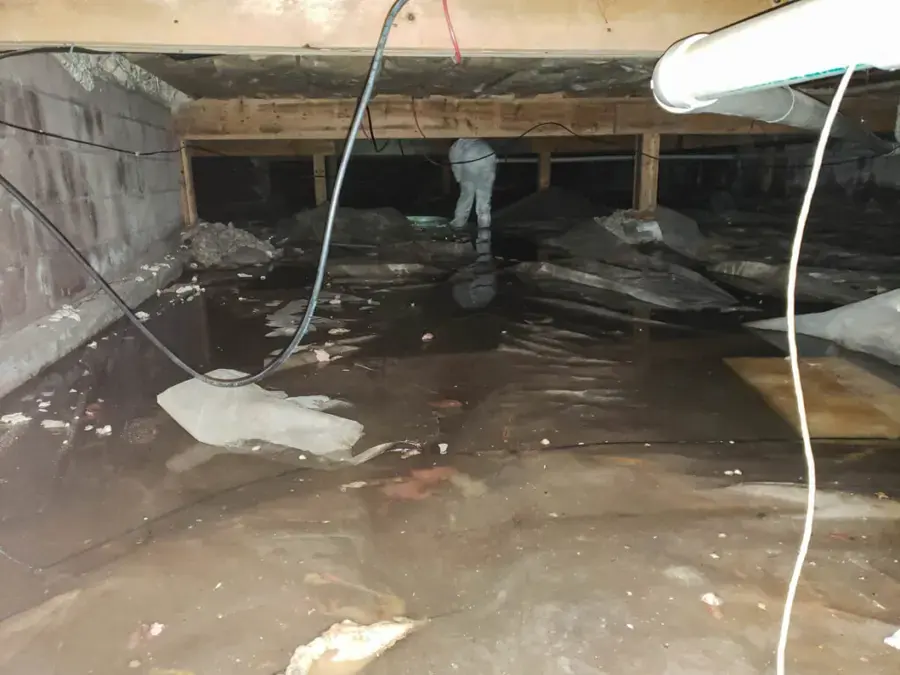
Water under the floor is easy to miss and slow to dry. The restoration team pumps the crawl space out, pulls soaked insulation and barrier, and dries the joists and subfloor to a verified reading.
(888) 373-8814Water under the house? Call Gresham now- 24/7 dispatch
- Daily moisture readings
- IICRC S500 standard
- Water category
- Category 1 leak or Category 2 and 3 groundwater
- Where it shows up
- Vented crawl spaces under 1960s to 1990s homes
- Key equipment
- Submersible pumps, LGR and desiccant units
- Typical dry time
- 4 to 7 days once the water is out
First steps for crawl space water damage in Gresham
- 1Look, do not crawl in
Check from the hatch with a flashlight; standing water and wiring do not mix.
- 2Check the sump
If there is a crawl space pump, see whether it is running and has power.
- 3Shut the supply if it is a leak
A dripping or spraying pipe under the floor means close the main.
- 4Note musty smells upstairs
Damp crawl space air rises into the house; note where it is strongest.
How crawl space water damage is handled in Gresham, OR
Pump out and remove
The extraction crew pumps standing water, then removes wet insulation batts, torn vapor barrier and silt that holds moisture against the wood.
Dry the wood, not just the dirt
Joists, rim boards and the underside of the subfloor get readings. LGR dehumidifiers and air movers run under a temporary tent, with desiccants when the air is too cold.
Close it back up correctly
A new vapor barrier goes down only after the framing reads dry, so moisture is not sealed in under plastic.
What does crawl space water damage cost in Gresham, OR?
In Gresham, OR, crawl space water damage cleanup typically runs $1,500 to $12,000 or more. The drivers are how much water is standing, whether it is clean or groundwater, how much insulation and barrier have to come out and how long the space stayed wet.
Leak into part of the crawl
- Pump-out and cleanup
- Partial insulation removal
- Joist and subfloor drying
Full crawl space flooded
- Full vapor barrier replacement
- All wet insulation out
- Tented dehumidification
Groundwater or sewage below
- Category 2 or 3 protocol
- Silt and debris removal
- Antimicrobial and extended drying
Ranges only, not a quote. The drivers are the water category, the square footage, the material class and how fast drying started. For a planning number, try the water damage cost calculator.
The crawl space water damage process, step by step
- 1
Map the moisture
The tech who does the walkthrough maps the wet area with pinless meters and thermal imaging before any equipment goes down, so the crawl space water damage plan matches what is actually wet.
- 2
Extract and remove
The extraction crew pulls standing water with truck-mounted extraction, then removes only what cannot be dried, such as saturated pad, wet insulation or Category 3 drywall.
- 3
Dry to the goal
The drying team sets air movers and LGR dehumidifiers to the evaporation load of each room, adding desiccants when a cold crawl space or dense material calls for it.
- 4
Verify and document
Equipment comes out when readings land within 2 to 4 points of a dry reference, and the moisture map, daily logs and photos go into the claim file.
Why Gresham crawl spaces take on water
A large share of Gresham homes were built between the 1960s and the 1990s on vented crawl spaces rather than slabs or full basements. Through a wet Oregon winter the water table rises, the soil stays saturated for weeks, and water seeps through foundation vents, cracks and low spots in the grade. Add a supply line that splits during an east-wind freeze or a crawl space sump pump that quits in a power outage, and the space under the floor can hold inches of water before anyone notices.
Homes near Johnson Creek, Kelly Creek and Fairview Creek, and on the lower slopes below Gresham Butte, see the most seepage because runoff and groundwater both collect there.
Trade fact: wet fiberglass insulation does not dry in place. It holds water against the subfloor, so it is removed and replaced after the framing is dry.
How the crawl space dry-out works
- Submersible pumps and extraction clear standing water and mud off the barrier.
- Soaked insulation, torn barrier and silt are bagged and removed.
- Pinless and pin meters read the joists, rim boards and subfloor from below.
- LGR dehumidifiers run under containment, with desiccant units when crawl space air is cold.
- Readings are logged daily until the wood is within 2 to 4 points of a dry reference.
If the water came from a failed pump, see sump pump failure cleanup. If a frozen line caused it, the source is covered under frozen pipe cleanup.
Keeping the next wet season out
Downspouts that empty right at the foundation, grading that slopes toward the house and blocked vents all make crawl space water more likely. Oregon State University Extension publishes homeowner information on moisture and drainage, and the EPA indoor air quality pages explain how damp crawl space air reaches the living space.
Crawl Space Water Damage across Gresham and nearby towns
The restoration team covers every Gresham ZIP and the surrounding east Multnomah County towns.
The restoration team works across Gresham, Troutdale, Fairview, Wood Village, Boring, Damascus, Happy Valley, Sandy and Corbett, from Johnson Creek to the Columbia.
97030970809723397236
See every neighborhood and town coveredCrawl Space Water Damage questions in Gresham, OR
Straight answers about crawl space water damage in Gresham homes and businesses. For water that is still moving, call first and read later.
Call (888) 373-8814How do I know if my crawl space has water?
Musty smells, cupping hardwood, higher humidity inside, and a sump pump that runs constantly or not at all are common signs. A flashlight look from the hatch usually confirms it.
Is some water in a crawl space normal in the winter?
Damp soil is common in Gresham winters, but standing water is not. Standing water keeps the framing and subfloor wet and needs to be pumped out and dried.
Does the vapor barrier have to be replaced?
Usually. A barrier that has water on top of it, tears, or silt on it traps moisture. It is replaced after the framing reads dry, not before.
Can a crawl space be dried in winter?
Yes. Cold air slows refrigerant dehumidifiers, so the drying team tents the space and adds desiccant units that keep working at low temperatures.
Will insurance cover crawl space water?
Water from a sudden plumbing failure is commonly covered. Groundwater seepage and flooding often are not without a specific endorsement or flood policy. Coverage depends on your policy, so it is worth checking with your own insurer.
How long does a crawl space take to dry?
Four to seven days is typical once the water is out, longer when the wood was wet for weeks or the space is very cold.
Crawl Space Water Damage in Gresham? Call now.
The longer water sits, the deeper it wicks into drywall, framing and subfloor. The restoration team handles crawl space water damage 24/7 across Gresham and east Multnomah County.