Appliance Leak Water Damage in Gresham, OR
Appliance leaks run quietly under cabinets and flooring before anyone sees them. The restoration team finds how far the water went and dries the cabinets, subfloor and walls in place wherever the readings allow.
(888) 373-8814Appliance leak in Gresham? Call now- 24/7 dispatch
- Daily moisture readings
- IICRC S500 standard
- Water category
- Category 1 supply, Category 2 drain water
- Common sources
- Washer hoses, dishwashers, fridge lines
- Hidden damage
- Under cabinets, subfloor, crawl space below
- Key equipment
- Thermal imaging, cabinet drying, LGR units
First steps for appliance leak water damage in Gresham
- 1Shut the appliance valve
Behind the washer, under the sink or behind the fridge.
- 2Unplug if it is safe
Only if the outlet and your hands are dry.
- 3Pull the toe-kick if you can
It shows whether water is sitting under the cabinets.
- 4Photograph the source
A picture of the failed hose or fitting helps the claim.
How appliance leak water damage is handled in Gresham, OR
Find the edges of the water
Thermal imaging and meters show how far the water spread under cabinets and flooring, often into the next room.
Dry cabinets in place
Toe-kicks come off and dry air is directed under the cabinets, which often saves the cabinets and countertops.
Check the crawl space
In most Gresham homes a kitchen or laundry leak drips through the subfloor, so the insulation and barrier below are checked too.
What does appliance leak water damage cost in Gresham, OR?
In Gresham, OR, appliance leak water damage cleanup typically runs $700 to $6,500 or more. The drivers are how long the appliance leaked, whether the water was clean supply or drain water, whether it went under cabinets and into the crawl space and how fast drying started.
Caught early, one area
- Extraction and readings
- Toe-kick removal
- Two to three days drying
Under cabinets and flooring
- Cabinet cavity drying
- Flooring removal where needed
- Subfloor drying
Slow leak or drain water
- Category 2 protocol
- Crawl space insulation out
- Extended drying
Ranges only, not a quote. The drivers are the water category, the square footage, the material class and how fast drying started. For a planning number, try the water damage cost calculator.
The appliance leak water damage process, step by step
- 1
Map the moisture
The tech who does the walkthrough maps the wet area with pinless meters and thermal imaging before any equipment goes down, so the appliance leak water damage plan matches what is actually wet.
- 2
Extract and remove
The extraction crew pulls standing water with truck-mounted extraction, then removes only what cannot be dried, such as saturated pad, wet insulation or Category 3 drywall.
- 3
Dry to the goal
The drying team sets air movers and LGR dehumidifiers to the evaporation load of each room, adding desiccants when a cold crawl space or dense material calls for it.
- 4
Verify and document
Equipment comes out when readings land within 2 to 4 points of a dry reference, and the moisture map, daily logs and photos go into the claim file.
How appliance leaks hide
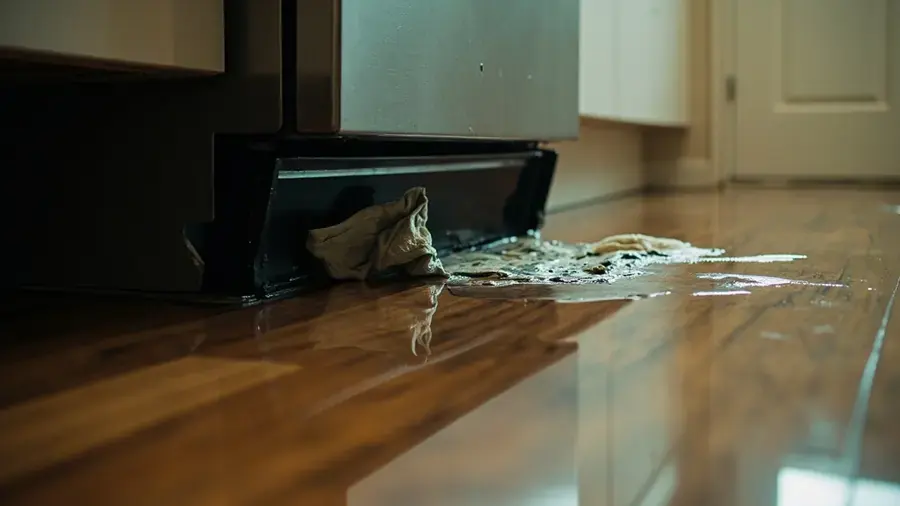
A washer supply hose that bursts is loud and obvious. A dishwasher door seal, a fridge water line or an ice maker fitting that drips for weeks is not. The water spreads under the cabinets, soaks the subfloor, and in a typical Gresham house built over a crawl space, drips down onto the insulation and vapor barrier below. The first sign is often cupping flooring, a soft spot in front of the sink or a musty cabinet.
Laundry rooms in newer Pleasant Valley and North Gresham homes are often on the second floor, which means a washer leak can also soak the ceiling of the room below.
Trade fact: clean supply water is Category 1, but a washer or dishwasher drain leak is Category 2, and pad or drywall it soaked is usually removed rather than dried.
How the dry-out works
- The water source is shut and the leak point is confirmed.
- Meters and thermal imaging map the wet area under cabinets and flooring.
- Toe-kicks come off and cabinet cavities are dried with directed air.
- Flooring that trapped water is lifted where needed, and the subfloor is dried.
- The crawl space below is checked, and wet insulation is removed.
A ruptured supply line under pressure is closer to a burst pipe cleanup, and water that went through the floor is covered under crawl space water damage.
Preventing the next appliance leak
Replace rubber washer hoses with braided ones every few years, check under the sink and behind the fridge for moisture, and consider leak alarms near appliances. The EPA WaterSense program has tips for finding hidden leaks, and Oregon State University Extension covers home moisture basics.
Appliance Leak Water Damage across Gresham and nearby towns
The restoration team covers every Gresham ZIP and the surrounding east Multnomah County towns.
The restoration team works across Gresham, Troutdale, Fairview, Wood Village, Boring, Damascus, Happy Valley, Sandy and Corbett, from Johnson Creek to the Columbia.
97030970809723397236
See every neighborhood and town coveredAppliance Leak Water Damage questions in Gresham, OR
Straight answers about appliance leak water damage in Gresham homes and businesses. For water that is still moving, call first and read later.
Call (888) 373-8814Can cabinets be saved after a dishwasher leak?
Often. Removing the toe-kicks and blowing dry air underneath dries most cabinet bases in place. Particleboard that swelled or sat wet for a long time may need replacing.
Why is my floor cupping near the fridge?
Cupping means moisture is coming up from below. A slow leak from the fridge water line can soak the subfloor for weeks before it shows.
Is appliance leak damage covered by insurance?
Sudden leaks are commonly covered after the deductible. Slow, long-term leaks are often excluded. Coverage depends on your policy, so check with your own insurer.
Is washer water dirty?
Supply water is clean. Drain water from a washer or dishwasher is Category 2 gray water, which changes what can be dried and what must come out.
What about the ceiling below an upstairs laundry?
It is checked with meters and dried at the same time, usually in place if it is still firm.
How long does drying take?
Two to five days is typical, depending on how long the leak ran and whether cabinets and subfloor soaked through.
Appliance Leak Water Damage in Gresham? Call now.
The longer water sits, the deeper it wicks into drywall, framing and subfloor. The restoration team handles appliance leak water damage 24/7 across Gresham and east Multnomah County.