Basement Flooding Cleanup in Gresham, OR
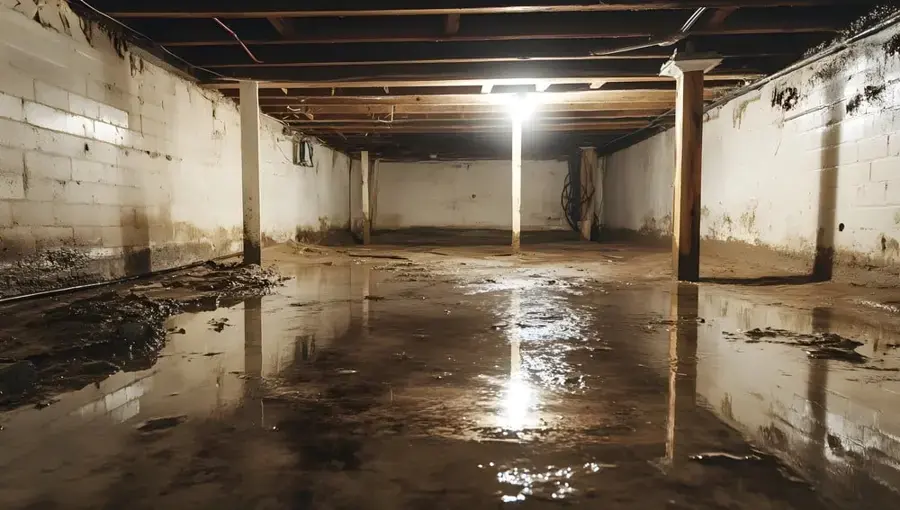
Daylight basements on the butte slopes take water from runoff, seepage and failed plumbing. The restoration team pumps the lower level out, opens only what readings require and dries it to a verified standard.
(888) 373-8814Basement flooded? Call Gresham now- 24/7 dispatch
- Daily moisture readings
- IICRC S500 standard
- Water category
- Category 1 to 3, set by the source
- Common sources
- Runoff, seepage, sump failure, plumbing
- Key equipment
- Pumps, truck-mounted extraction, LGR units
- Typical dry time
- 3 to 6 days for a contained loss
First steps for basement flooding cleanup in Gresham
- 1Power off at a dry panel
Never walk into a flooded basement with live circuits.
- 2Find the source
Plumbing, a sump pump, a window well or water seeping through the wall.
- 3Move what floats
Boxes, rugs and electronics off the floor and upstairs.
- 4Photograph the water line
A mark on the wall shows the depth for the claim.
How basement flooding cleanup is handled in Gresham, OR
Pump and extract
Deep water goes out with pumps, then truck-mounted extraction pulls the rest from carpet and concrete.
Open the finished walls
In finished basements, drywall and insulation that wicked water are cut out where readings require, often along the whole exterior wall.
Cold slab, longer drying
Basement concrete stays cool, which slows drying. Desiccant dehumidifiers help where refrigerant units lose efficiency.
What does basement flooding cleanup cost in Gresham, OR?
In Gresham, OR, basement flooding cleanup typically runs $2,000 to $15,000 or more. The drivers are the depth and water category, whether the basement is finished, the square footage and how fast drying started.
Unfinished basement
- Pump-out and extraction
- Concrete and wall drying
- Antimicrobial where needed
Finished lower level
- Carpet, pad and flood cuts
- Insulation removal
- Several LGR dehumidifiers
Groundwater or sewage
- Category 2 or 3 protocol
- Containment
- Extended drying
Ranges only, not a quote. The drivers are the water category, the square footage, the material class and how fast drying started. For a planning number, try the water damage cost calculator.
The basement flooding cleanup process, step by step
- 1
Map the moisture
The tech who does the walkthrough maps the wet area with pinless meters and thermal imaging before any equipment goes down, so the basement flooding cleanup plan matches what is actually wet.
- 2
Extract and remove
The extraction crew pulls standing water with truck-mounted extraction, then removes only what cannot be dried, such as saturated pad, wet insulation or Category 3 drywall.
- 3
Dry to the goal
The drying team sets air movers and LGR dehumidifiers to the evaporation load of each room, adding desiccants when a cold crawl space or dense material calls for it.
- 4
Verify and document
Equipment comes out when readings land within 2 to 4 points of a dry reference, and the moisture map, daily logs and photos go into the claim file.
Where basements flood in Gresham
Most Gresham homes sit on crawl spaces, but homes built into the slopes of Gresham Butte, Grant Butte and the hills of Southwest Gresham and Pleasant Valley often have daylight basements. Those lower levels are cut into the hillside, so runoff from an atmospheric river and a rising winter water table press against the uphill wall. Newer Pleasant Valley homes add finished basements with carpet, drywall and bathrooms, which raises the cost of every gallon.
The other common sources are plumbing: a water heater or washer in the lower level, a supply line that freezes in an exterior wall, or a sump pump that fails when the power goes out.
Trade fact: Category 1, 2 and 3 water are handled differently. Clean water from a supply line is dried in place when possible; seepage and sump water are usually Category 2; sewage and flood water are Category 3.
How a basement dry-out runs
- Pumps and extraction remove standing water.
- Meters map how far water wicked into walls, carpet and the base of stairs.
- Wet carpet pad, baseboard, drywall and insulation are removed where required.
- LGR and desiccant dehumidifiers plus air movers dry the slab, framing and walls.
- Daily readings go into the drying log until the goal is met.
If a pump failed, see sump pump failure cleanup. A tank in the lower level is covered under water heater failure cleanup.
Reducing the next basement flood
Keep downspouts extended away from the uphill wall, keep window wells clear and consider a battery backup for any sump pump. Ready.gov covers flood preparation, and Oregon State University Extension has homeowner information on drainage.
Basement Flooding Cleanup across Gresham and nearby towns
The restoration team covers every Gresham ZIP and the surrounding east Multnomah County towns.
The restoration team works across Gresham, Troutdale, Fairview, Wood Village, Boring, Damascus, Happy Valley, Sandy and Corbett, from Johnson Creek to the Columbia.
97030970809723397236
See every neighborhood and town coveredBasement Flooding Cleanup questions in Gresham, OR
Straight answers about basement flooding cleanup in Gresham homes and businesses. For water that is still moving, call first and read later.
Call (888) 373-8814Why does water come through my basement wall only in winter?
The winter water table and weeks of rain saturate the soil against the uphill wall, and hydrostatic pressure pushes water through cracks and the joint between wall and floor.
Can finished basement carpet be saved?
Carpet from a clean-water loss is often saved if it is extracted quickly. Pad is usually replaced. Carpet from seepage, sump or sewage water normally comes out.
How long does a basement take to dry?
Three to six days is typical for a contained loss. Cold slabs, dense concrete and finished walls with insulation take longer.
Is basement flooding covered by insurance?
Water from a sudden plumbing failure is commonly covered. Seepage, sump overflow and surface water often need endorsements or flood coverage. Coverage depends on your policy, so check with your own insurer.
Do I need to remove all the drywall?
Only what readings show is wet, or what touched Category 3 water. Flood cuts are commonly 12 to 24 inches up.
What should I do with stored boxes?
Move them out of the water and photograph them. Wet cardboard and paper usually cannot be saved; hard plastic bins can be cleaned.
Basement Flooding Cleanup in Gresham? Call now.
The longer water sits, the deeper it wicks into drywall, framing and subfloor. The restoration team handles basement flooding cleanup 24/7 across Gresham and east Multnomah County.